
About letters, leadership and perfect October's light.

There’s something crazy about sending a letter: once you drop it off at the post office, it’s gone - there’s no turning back. “Emails are the same,” you might respond. Well, not really. A letter holds a different weight, it’s a physical act: you choose the paper, you write it with a real pen in your real hand, you seal it in an envelope, you write the address, and then you let it go. When it arrives, someone opens their mailbox, feels the surprise, and perhaps reads it while walking up the stairs. And, then, letters stay - maybe on a table, maybe in a pile of books, maybe on the kitchen counter, or tucked in the pocket of a jacket. They linger.
So, you better be careful when you decide to write a letter. What about a WhatsApp text? The comfort of being able to delete those words? Ouff. But no, romantics adore the hazard. And not only I am a hopeless romantic, but I also love the hazard of things that stay.
-
It’s 20.23 on a quiet, windy, crisp night of the beginning of October. I’ve just blown the fuse in my apartment trying to fix the vent in the bathroom. And now I’m sitting in the darkness, sipping a tea, with no idea of what to do (and yes, I’ve already consulted Google, of course). This whole "doing things on my own" doesn’t always go as planned.
October, here you are. I’m turning 33 in a few days, I still have to unbox and organize a lot of things in my new place, the mess is everywhere, the induction doesn’t work properly, I can’t get the app to do laundry to book me in (old buildings in Copenhagen often have a common laundry room) and I will probably have to sand the wood around the sink, which none before me took care of. Little by little. In the meantime, this morning I could have cried of joy when I woke up to have breakfast and I turned on the radio while the most beautiful golden-pink light streamed into the living room.
I couldn’t feel more grateful.
-
I’m rewatching The Bear, season 1. Partly because it’s my comfort show (alongside Sex and the City—don’t judge me, I know it’s problematic in many ways, but it’s still SATC). Also, because the first time I watched it, I was only seeing things from a chef’s perspective, without fully considering the story of a broken family with an omnipresent shadow on it. Lastly, it feels timely, as we’re at another major turning point at the restaurant: starting mid-October, we’ll be offering dinner service and that means new hires, new people, and a new team to build.
As I already mentioned, managing people has always been my biggest challenge, and lately, it’s been weighing on my mind, raising a lot of questions. I even revisited my notes from the Leadership and Business course I took at MAD Academy last year, trying to recapture the sense of empowerment I felt back then. At one point, I had written: “Don’t be a wolf leading sheep; be a wolf leading wolves.” I used to think the biggest challenge would be keeping people motivated, but now I’ve shifted my focus to keeping them inspired.
A few days ago, I arrived at the restaurant for some meetings (I wasn’t scheduled for production or service) and I noticed a lonely cake at the bar, looking a bit sad. As usual, I could tell how it would taste without needing to try it, but I took a slice and shared it with the other managers. No one was particularly impressed—it was dry, a day old, with unbalanced flavors and unpleasantly bitter spices. I went back to the kitchen to ask why a fresh cake hadn’t been baked that morning, as is our routine. I felt an old rush of disappointment and frustration welling up inside, but I stayed calm and asked if they had time to make a fresh one for the afternoon.
Afterward, I went to my secret spot - a staircase in the back that leads to the rooftop, my favorite place to decompress and think. Sitting there with my cigarette, watching Fall turn the courtyard into a feast of orange and red leaves, I reflected: Why did someone so skilled let that opportunity slip? I know how I feel when I do the bare minimum - usually on days when something’s off, when I’m sad, or when my self-esteem is low. So, how do I prevent this in others? I don’t want anyone here to feel that way. I want people to feel proud of their work, to bring intention and brightness to what they do - not just ticking boxes to get through the day.
But then I wondered: Is it fair to want this for them? Or is it just me? What if, for them, it’s just a job? How do I keep people inspired without expecting them to share my ambitions, dreams, or reasons for being here? Why do other industries seem to avoid these nuances of desire? You wouldn’t neglect a task in an office, yet in a restaurant, the standards can be lowered. Why is it easier to expect someone to complete a spreadsheet than to ask themselves, “Would I eat this? How would I feel as a guest here?”
I recently read something about the difference between service and hospitality that’s been stuck in my mind: when you work without thinking about the guests, you’re providing service; when you focus on the guests, how they feel, and what they need-that’s hospitality.
(Fun fact: I was working at Hart when The Bear was filming in Copenhagen and during MAD. I remember meeting friends at Holmen after my first day of class, and coincidentally, it was the same day they filmed the shop scene. You can even spot my blonde ponytail in the background when Marcus walks away with his breakfast - quite a magical coincidence, isn’t it?).
-
While I try to get through leadership dilemmas and moving in, I can leave some snaps from kitchen (and no-kitchen) life:
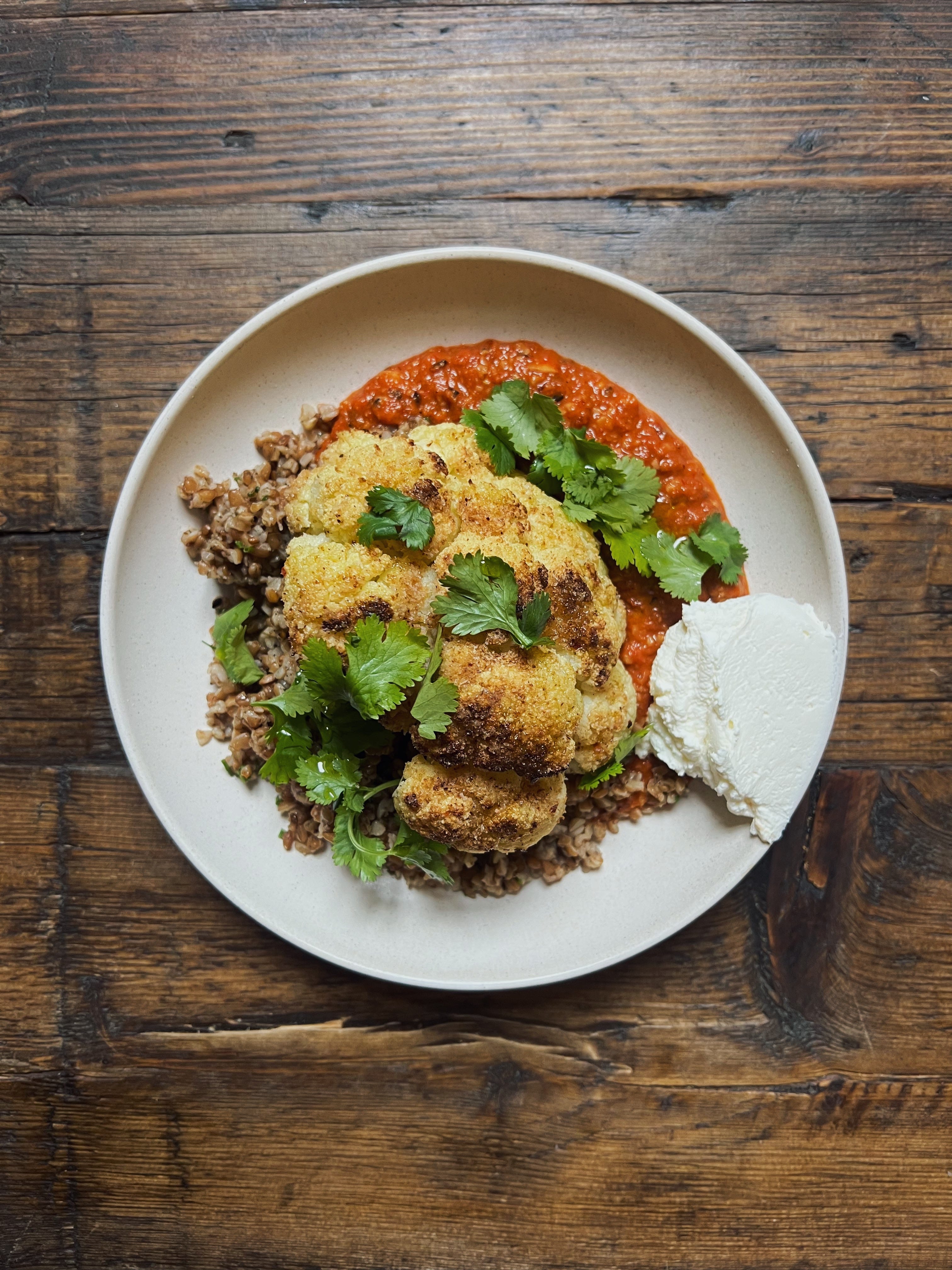
First roasted cauliflower of the season. Proudly showing its florets between lovely romesco, smoked labneh and wholewheat bulgur (none of us is called Ottolenghi, I swear).
To make smoked labneh: fire up your BBQ and smoke the yogurt, salt it, and then drain it in cloth overnight.
I’d love to share an exact recipe for the romesco, but honestly, it’s one of those things I always make by feel: roasted peppers (no BBQ this time, since the labneh already had a rich smokey note), extra virgin olive oil, vinegar, lemon juice and zest, roasted garlic and shallots, parsley, toasted almonds, tomato paste (or roasted tomatoes when in season), every variety of paprika you have on hand, cayenne, black pepper and, of course, salt.
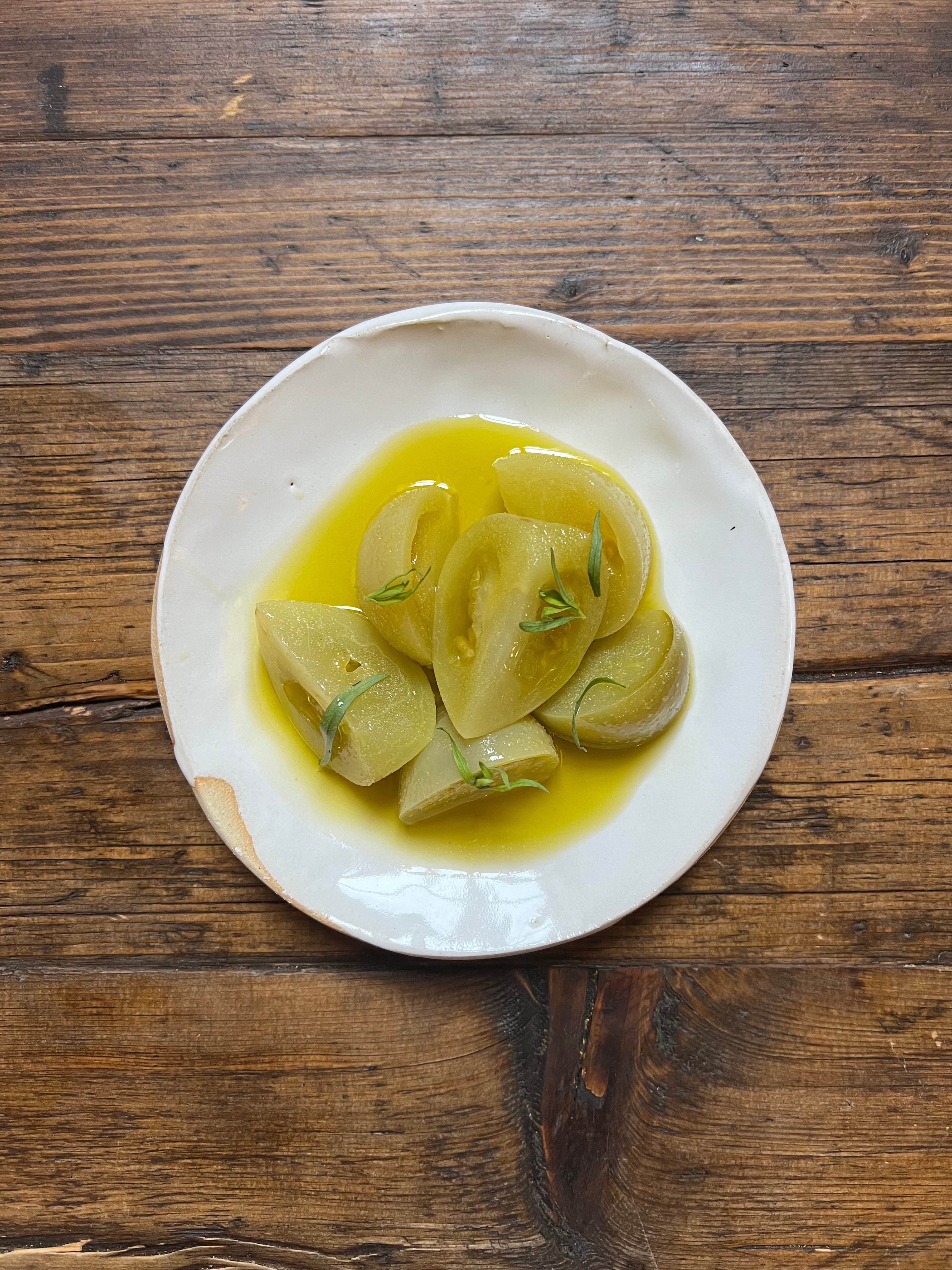
Preserved green tomatoes. My grandma used to make jars of them at the end of summer, and when I saw one of our farmers had them, I couldn’t resist - I bought over 20 kg.
Cut them into wedges, then blanch them in a simmering mix of water and vinegar (1:1 ratio, plus a little salt, but not too much to maintain their texture). As soon as the green starts fading, they’re ready. Let them cool and dry slightly before covering them with extra virgin olive oil and adding your choice of aromatics. For these tomatoes, I used garlic (of course!), parsley stems, tarragon, fresh oregano, fresh chilies, and lemon zest. Sprinkle some flaky salt on it before serving.
Preserving vegetables is one of my favorite kitchen meditations.
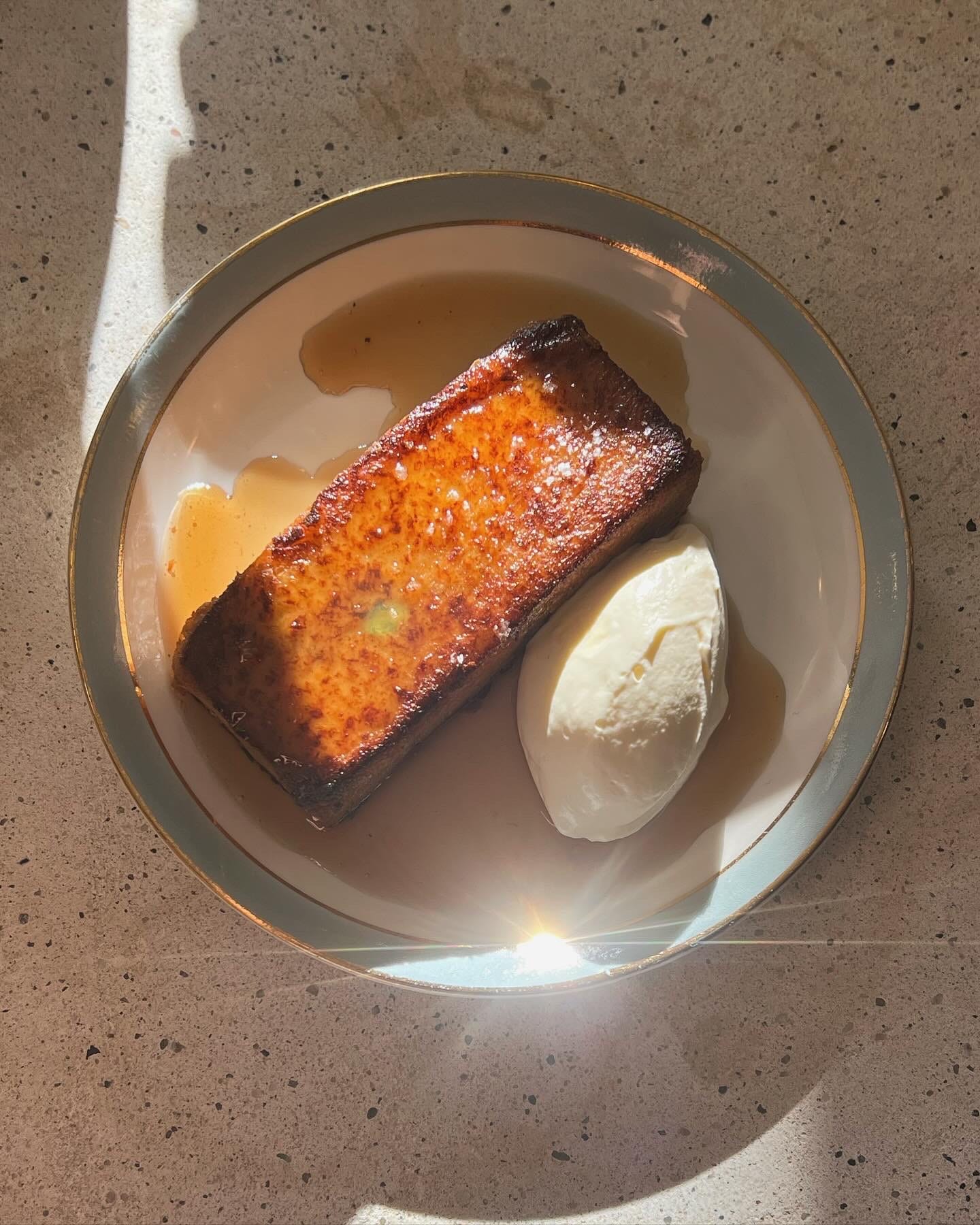
Bread and Butter Pudding! Another nostalgic childhood memory, in a way. In northern Italy, there are many variations of this dessert, commonly called torta paesana. My dad used to make it on Saturdays when he fired up the wood oven to bake pizza. I remember him soaking the bread in milk, adding a few spoons of sugar, crushed amaretti, cocoa powder, pine nuts, and raisins. The quantities were always improvised, but the result was always delicious.
This “cake,” with its dark, uneven surface resembling a volcano, would bake in the wood-fired oven after the pizzas were done and the fire was out - sometimes for hours, sometimes all night. The next morning, it was the best breakfast (and guess who was up early, stealing all the slightly burnt pine nuts that floated to the top before anyone else was awake?).
Now that I live abroad, torta paesana has become bread pudding. Given how much time I’ve spent working with bread over the years, I’ve tried to perfect a recipe that delivers a custardy, rich, and firm pudding. Surprisingly, when it comes to desserts or baking, I’m a bit more methodical and actually feel the need to write down the recipes (on a scrap of parchment paper, of course, but still!). So, here you go :)
Bread and Butter Pudding
1 kg stale bread (crusts removed works better)
1.5 liters of milk
Soak the bread in the milk and let it sit for a few hours (overnight is even better).
Make a crème anglaise with:
1 liter of milk
1 liter of cream (double cream preferred)
80 g sugar
300 g egg yolks (yes, let's go big!)
50-100 g Bourbon (optional, I used some leftovers from “bar experiments” gone awry)
Salt
2 vanilla pods
1/2 tonka bean
2 cinnamon sticks
1 clove
Combine milk, cream, half of the sugar, and the spices in a pot, and bring to a gentle simmer. Slowly pour it over the egg yolks and sugar mixture. Return it to the stove, stirring constantly, until the crème coats the back of a spoon.
In a cake tin, gastro, or baking container of your choice, break the soaked bread into chunks and smaller bites (I like to keep some texture). You can also add soaked dried fruits if desired. Pour the crème anglaise over the bread, sprinkle the top with brown sugar, and add a few pats of butter.
Bake at 160°C for about an hour (baking time depends on how much batter you’ve used). Let it cool down — I usually place a weight on top overnight, which gives me a delicious, firm brick that slices perfectly thin the next morning.
We served it pan-fried (in more butter, of course) with whipped crème fraîche and a generous drizzle of smoked dark maple syrup. A pinch of flaky salt and some lemon zest to finish. Et voilà.
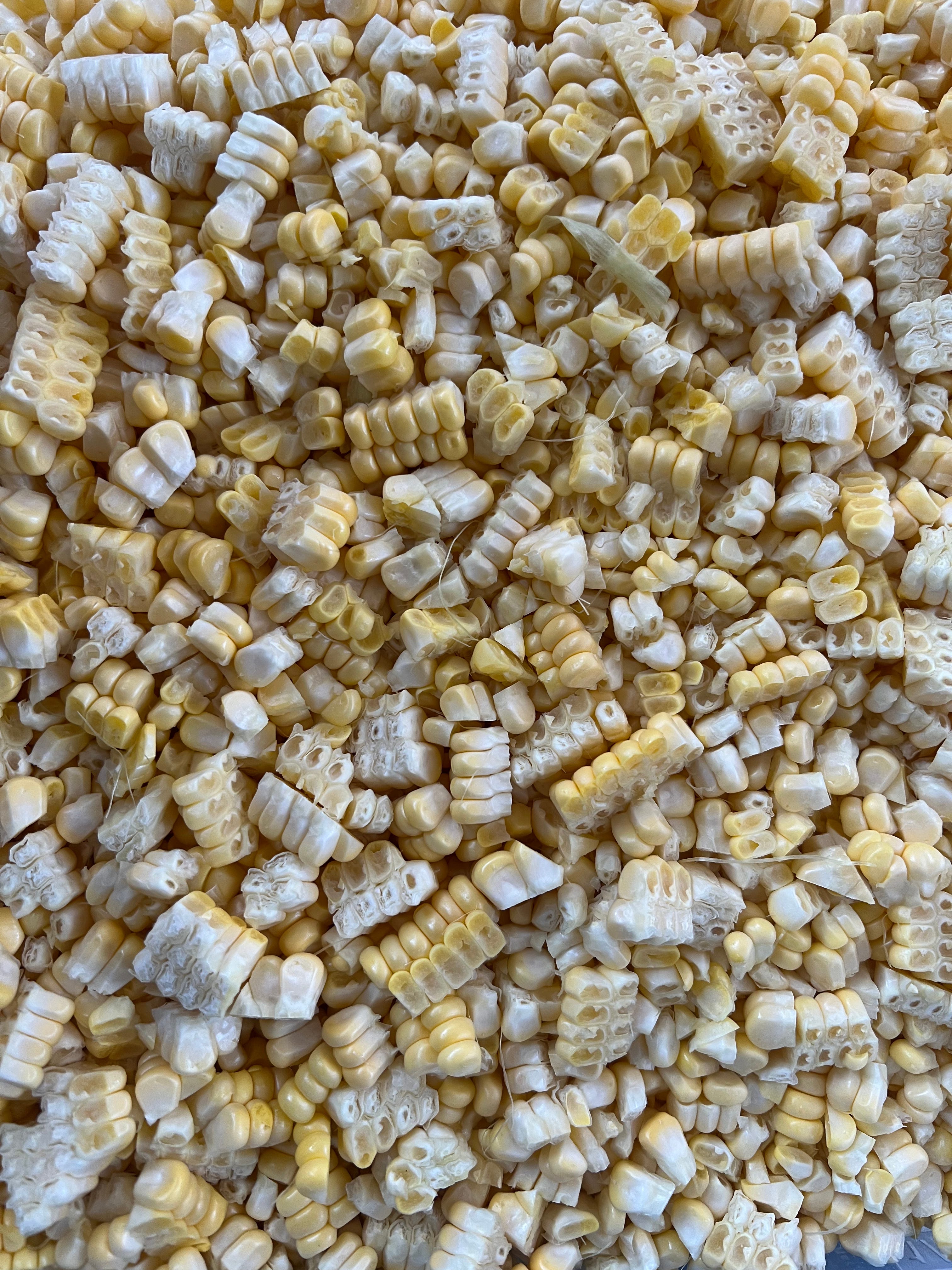
Corn season lasted literally two weeks this year. But this corn… like candies.
And yellow Lego bricks, also.
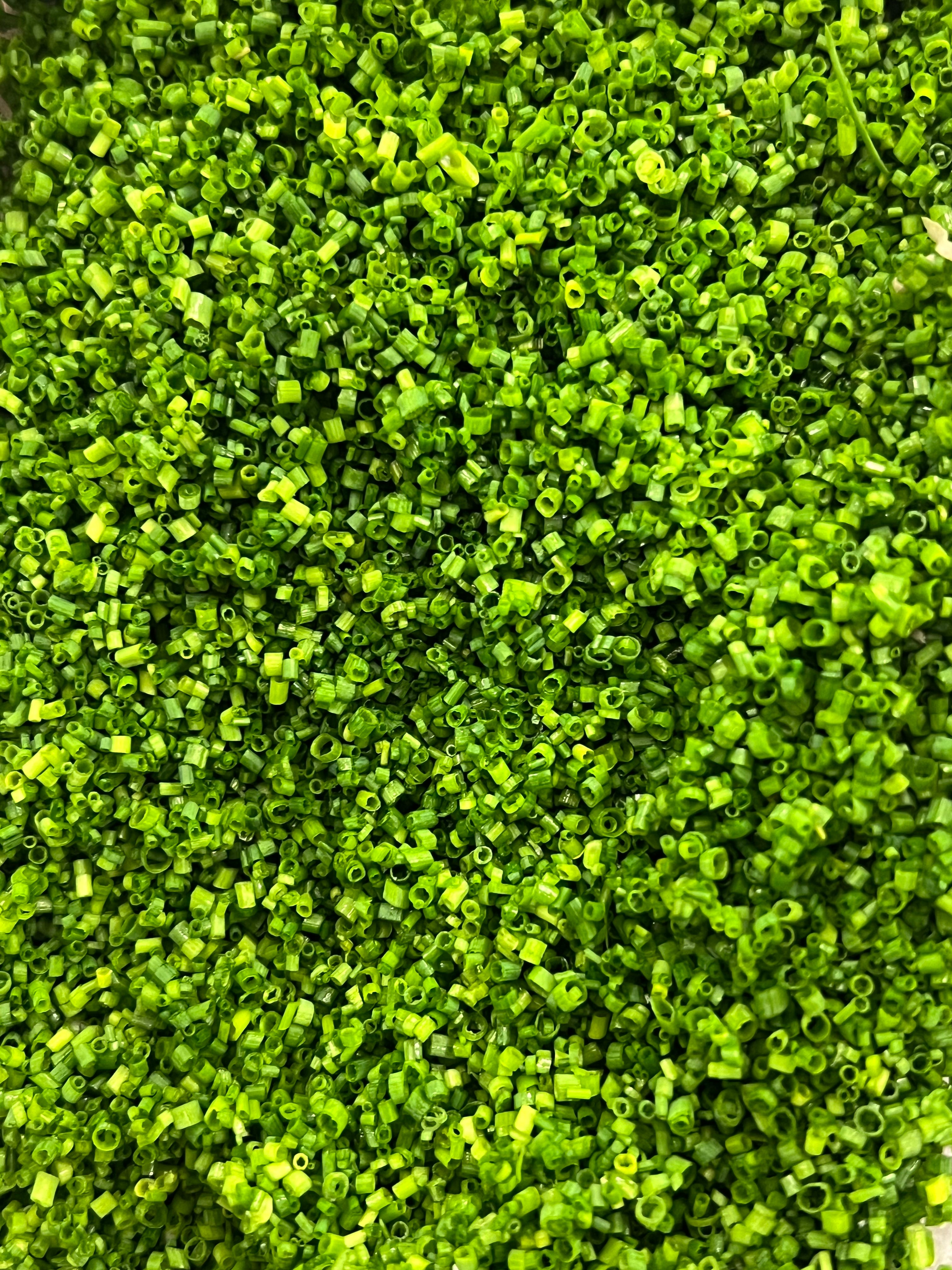
Cute kitchen story: One of the guys cut these chives last week. As you can see, they’re cut very finely. That evening, I was at the pass plating a dish, and when I opened the container, the waiter in front of me immediately said, “Wow, these chives smell amazing, so fresh.” I smiled and pointed out how thinly they were cut. “And notice, there’s no sign of oxidation. That’s what happens when the knife is freshly sharpened.”
“I didn’t realize the difference could be that noticeable. That smell, incredible.”
“Details.” I said, before handing the plate to him.
We usually say, “The devil is in the details.” But in his book Silo, Douglas McMaster wrote, “God is in the details.” I think about that line almost every day.
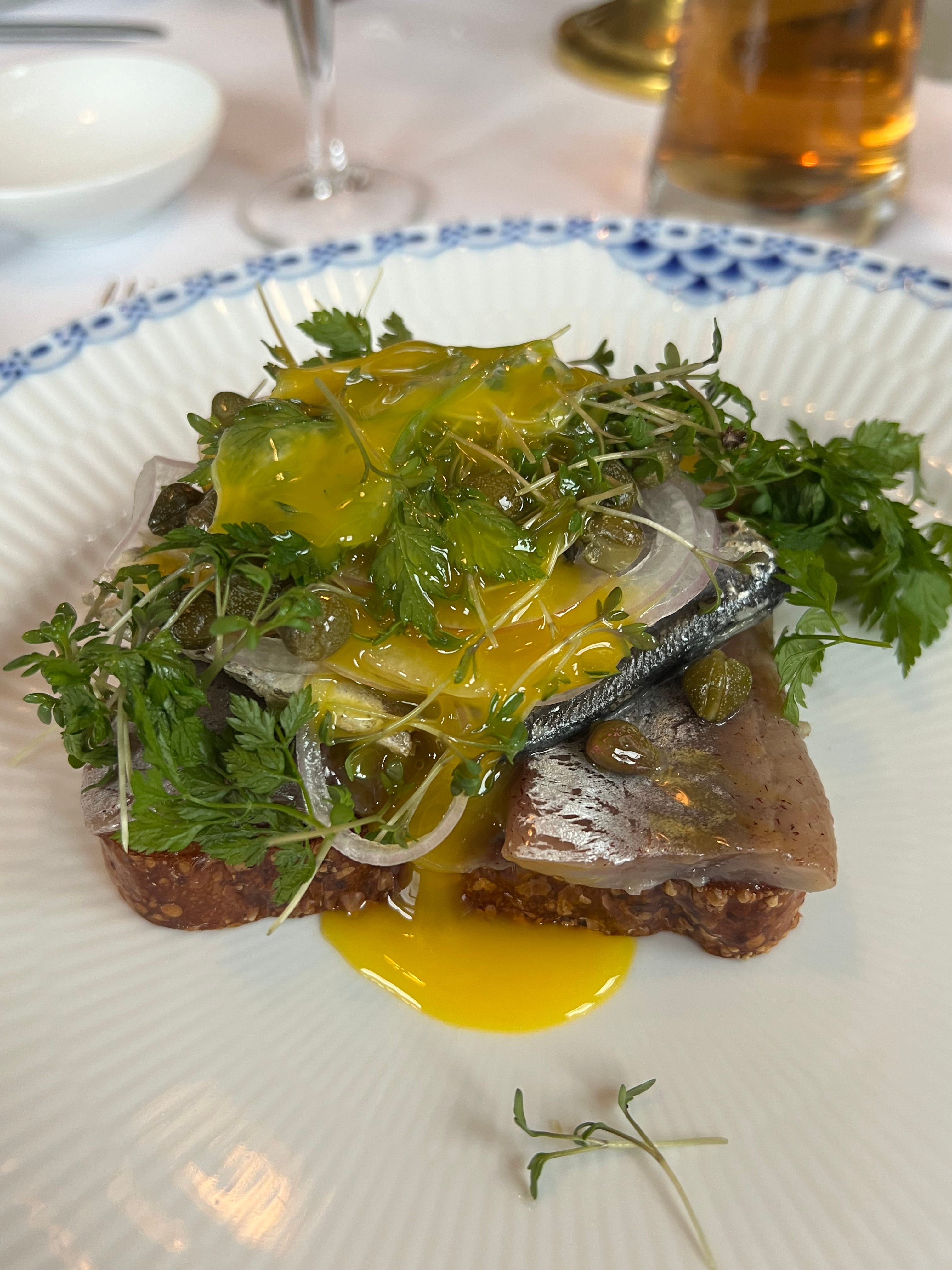
We went to Lumskebugten for a classic Danish lunch. While I haven’t had much traditional smørrebrød, I’m always fascinated by these old-school restaurants where every detail is meticulously curated, the service is kind and attentive, and the atmosphere feels authentically nostalgic in the best way. This was probably the most quintessentially Danish lunch I’ve had so far. I read the menu with curiosity, as each smørrebrød featured a small, unexpected twist. The highlight was this one, with pickled herring, pickled sardine, and a fresh egg yolk. Is there anything more satisfying than breaking into a yolk and watching it melt, coating everything in rich, golden goodness?
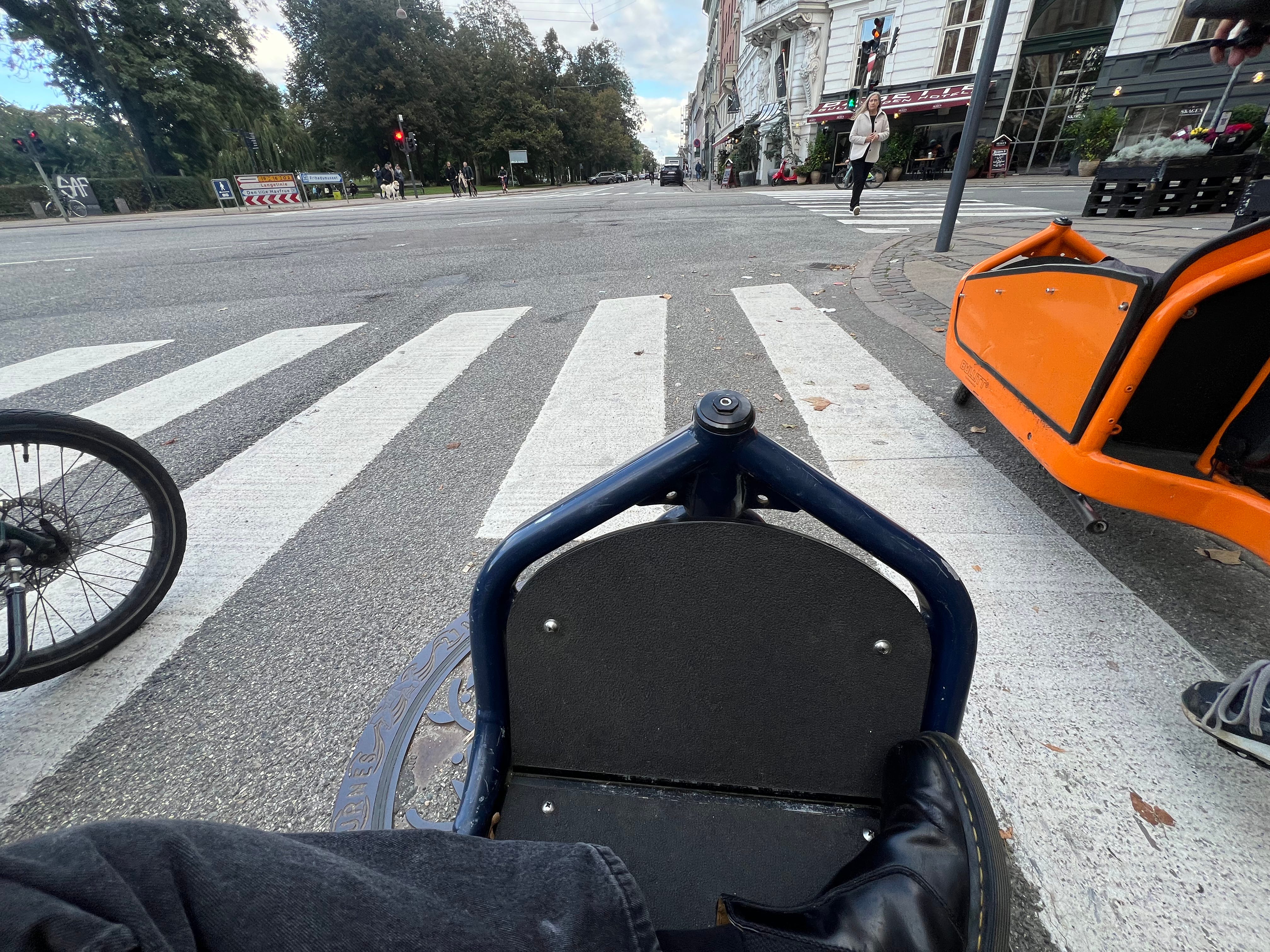
Best rides.
Moving highlights.
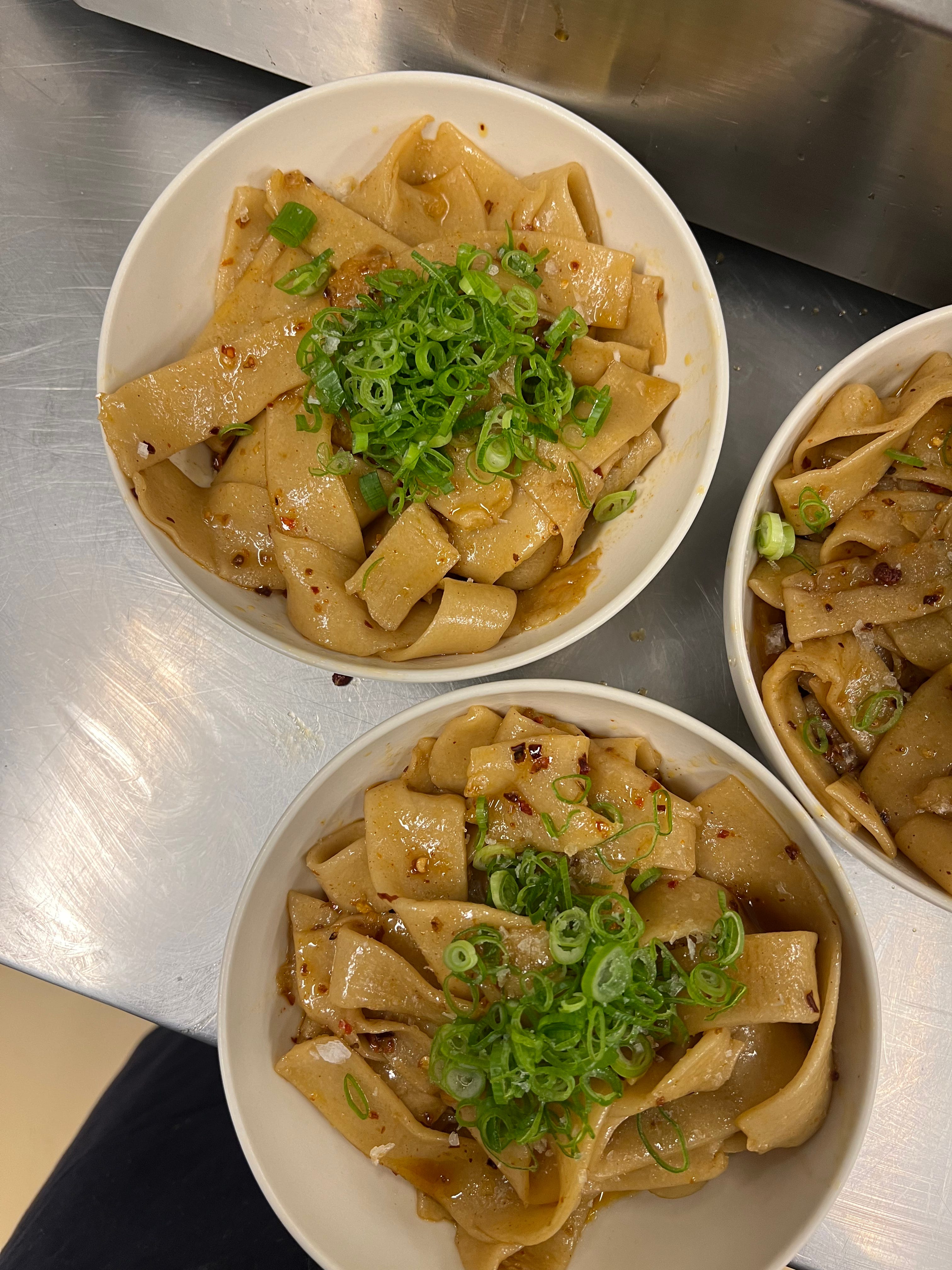
Hand made and hand cut noodles for staff, by Martin and Edgar. Getting this for dinner, during another 12 hrs in the kitchen day, when my mood was very low and I was extremely tired, felt like a balm.
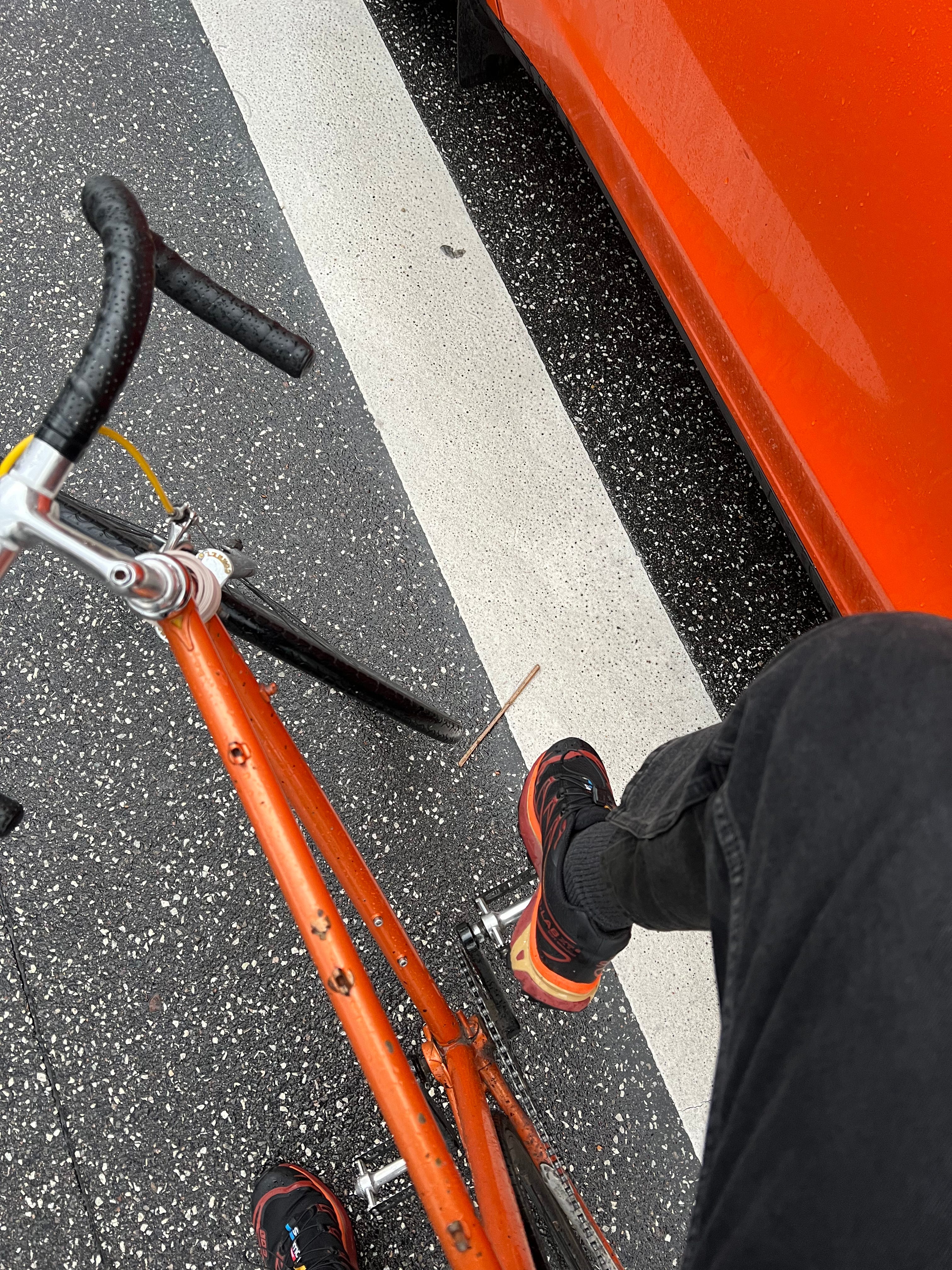
All orange everything. Always.

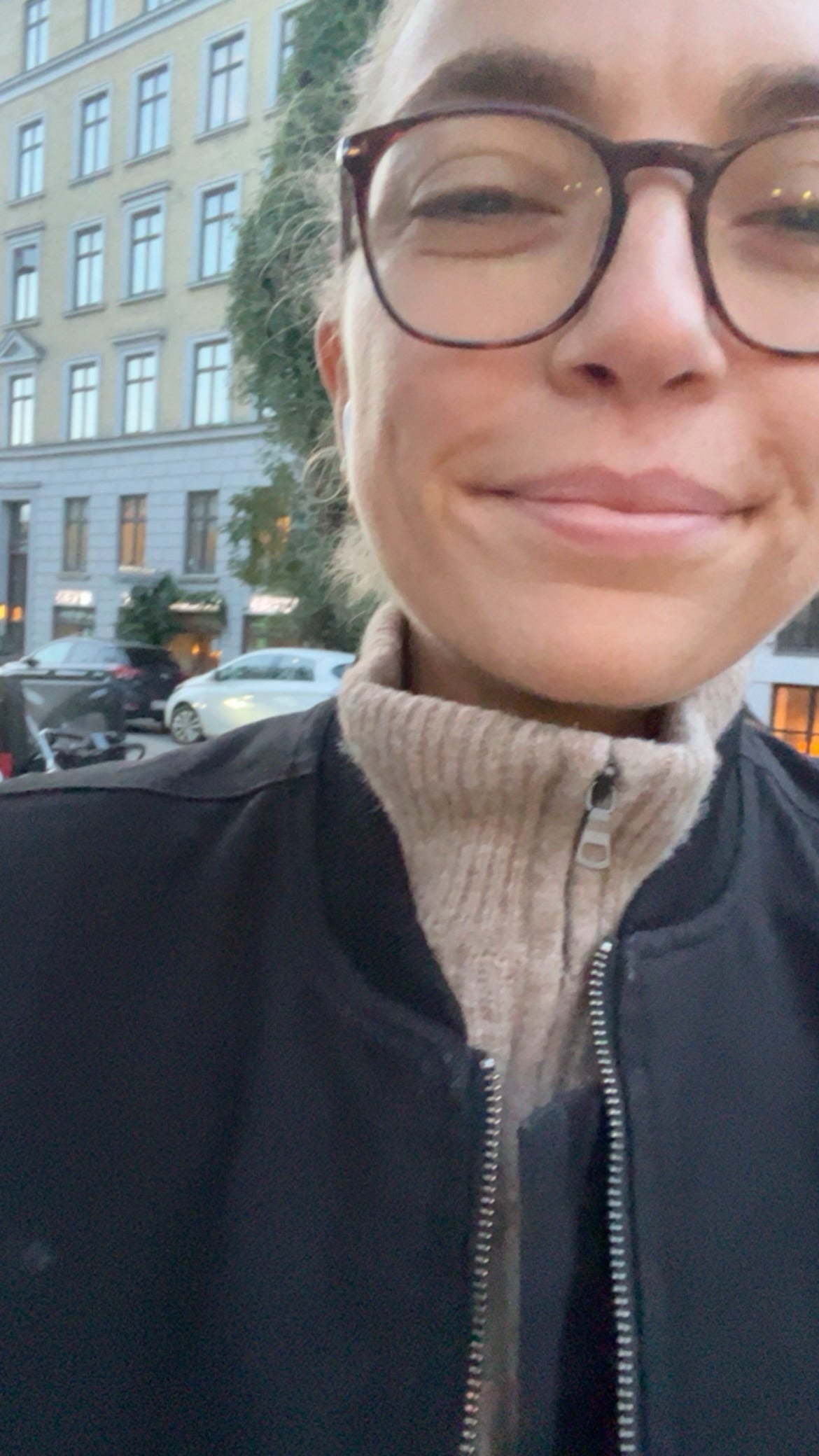
Incredibly tired and with no make up. But “Mi fai un sorrisone?” always works.
Long one, thanks for reading.
Cook yourself something comforting, write letters and listen to the morning radio.
Reflect without overthinking. Get lost in the beauty of fall light, enjoy October.
See you soon 🧡